Redesigning how facilities see, and fix, their hardware remotely.
Project American Expres
Category Web, Marketing
Sole contributor. UX, UI
Contributors AMEX Brand Team, Red Ventures, CX leadership
01
Challenges
Two business goals were pulling in the same direction: reduce agent-dependent sales calls, and deliver an experience worthy of a major rebrand.
American Express needed visitors to make card decisions online, without needing to pick up the phone — while also elevating every new digital experience to match a company-wide brand overhaul, and pushing their proprietary personalization further than ever before.
Context & Constraints
Feedback and data showed that visitors couldn't get meaningful information from the Amex website to help them decide which card fit their spending habits — so they turned to chat or phone agents instead, driving up cost and call time. Amex needed that self-serve decision-making to happen online, before a call ever started.
At the same time, Amex wanted every new digital experience to reflect their new brand standards — and to go further, using their proprietary data science models to power visual design, not just content delivery. The ask was to figure out how design itself could carry that personalization, rather than personalization living only in the backend.
02
Research & Discovery
The answers weren't missing from the page — they were just buried too deep to matter.
Working alongside our Lead UX Researcher, I spent multiple days listening directly to call center engagements to understand where users were getting stuck. The pattern was clear: the information people actually needed — spending habits, relevant membership rewards, clear card benefits — existed on the page, but it was buried in long-form marketing content further down, a side effect of strict branding guidelines that prioritized narrative over utility.
02
The Approach
We built the personalization engine visual design had been missing.
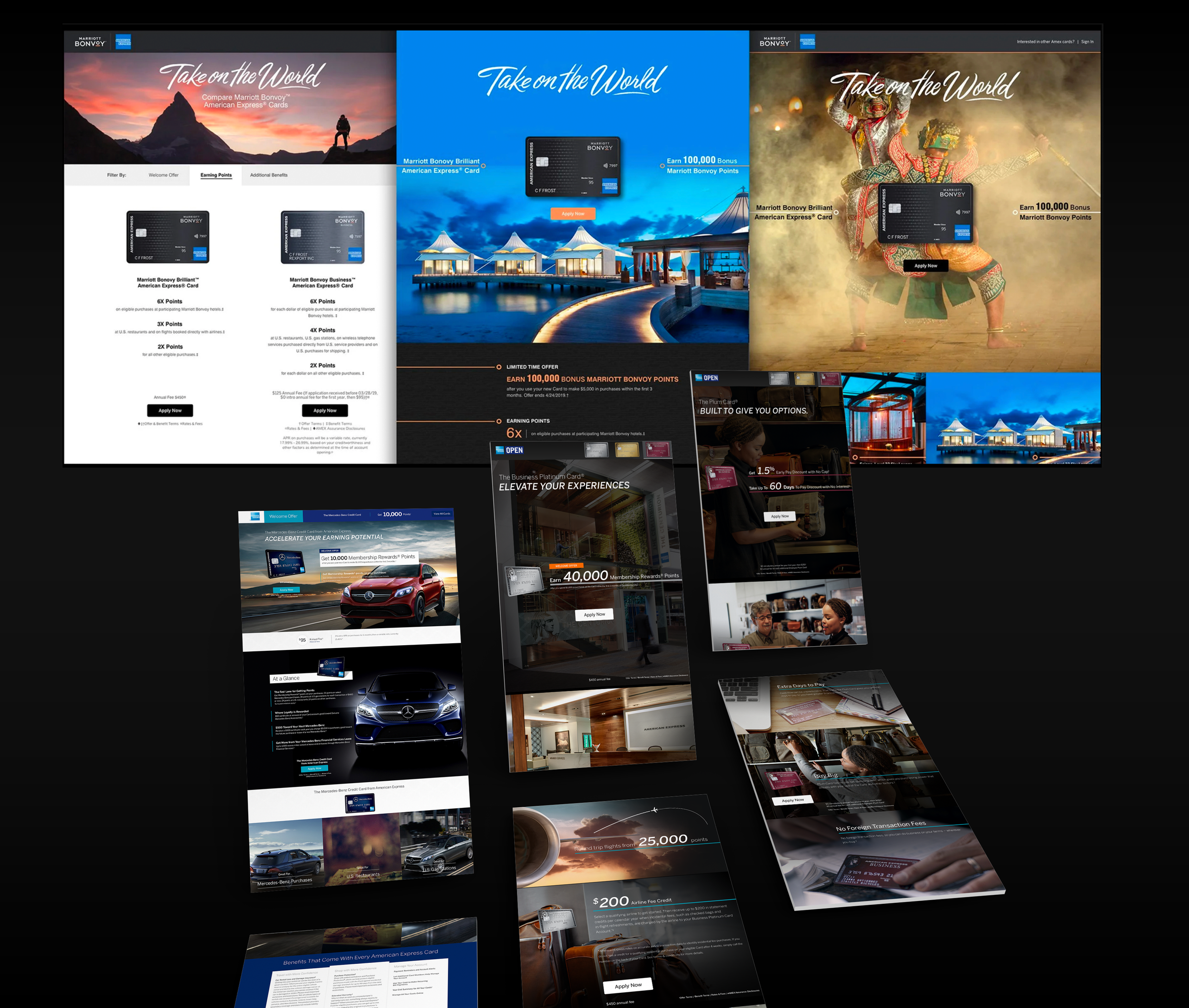
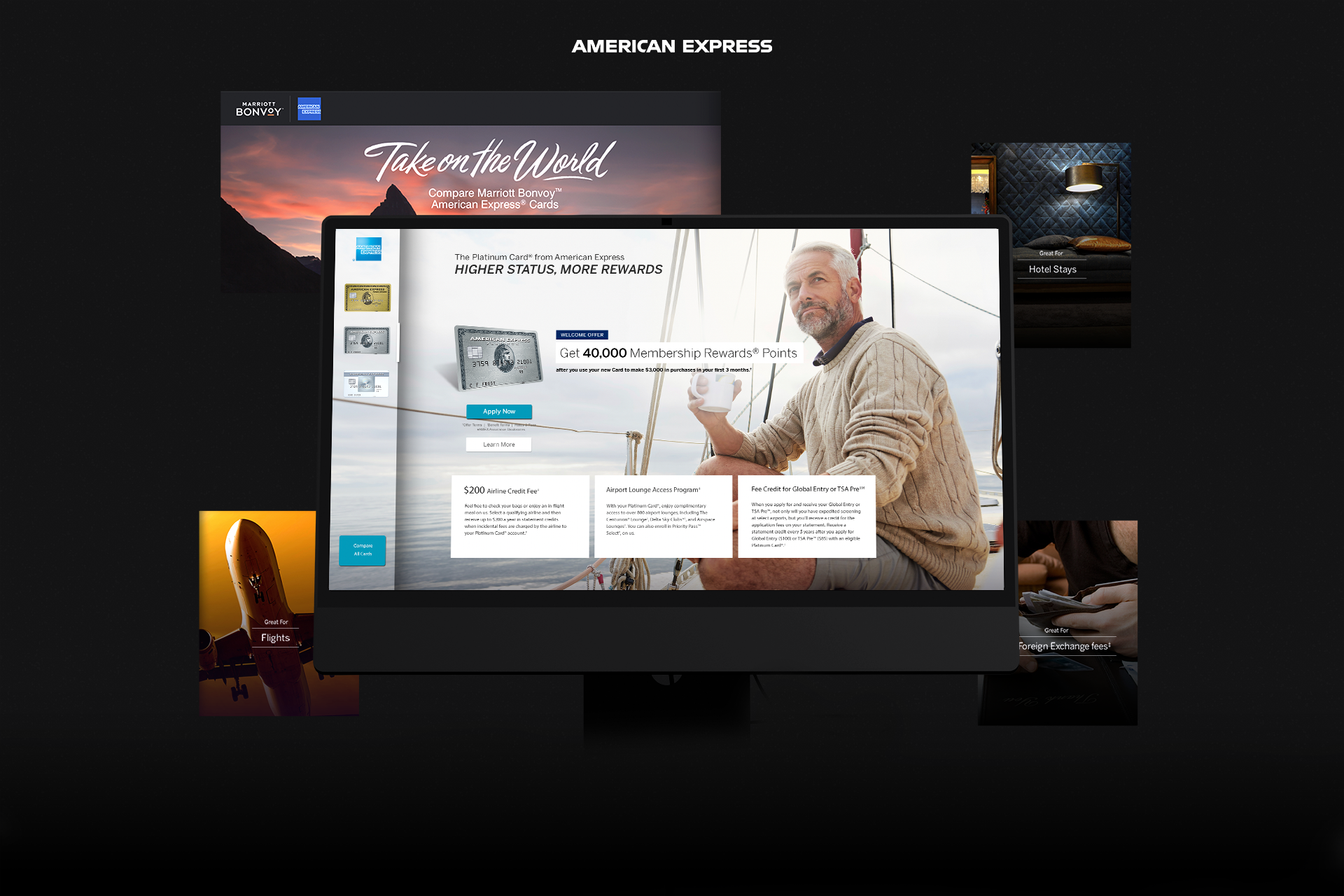
This became an opportunity to push design and engineering beyond traditional content customization. Working with data scientists, engineers, marketing analysts, and product owners, we built a proprietary customization platform that could educate potential cardholders early — before any sales call — while also targeting them directly through imagery, design, and content that felt authentic to them as individuals or business owners.
The rebrand gave us the cover to solve both problems at once: we combined new brand assets — photography, styling, content — with a new architecture and experience-delivery tech stack running behind the scenes. My responsibility was mapping every design variation this required, across the many iterations needed to target each audience segment with a genuinely customized experience, while preserving the integrity of the new design system.
04
Testing the Model
One model leaned on brand alone. The other gave people something to act on.
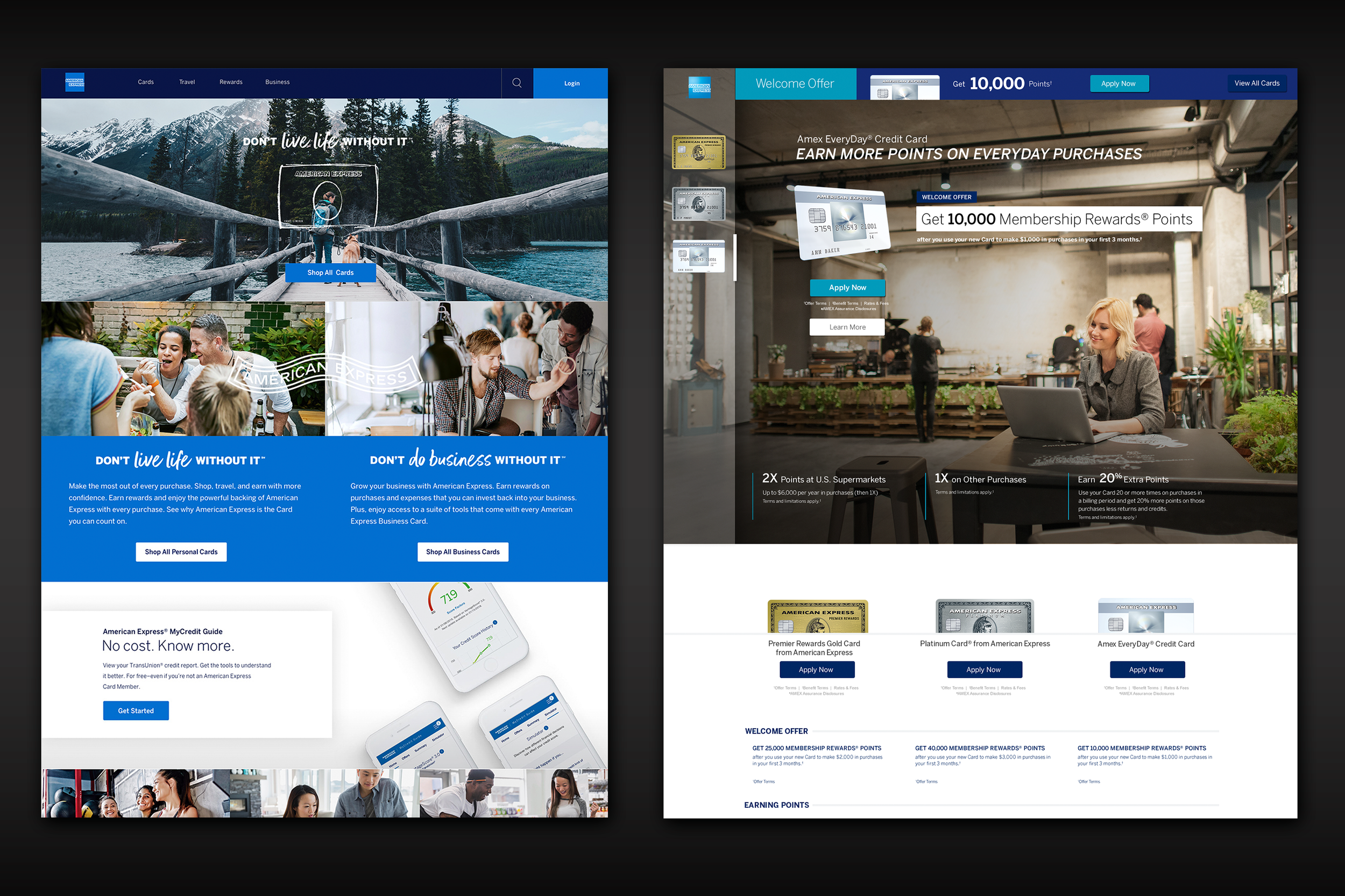
The Amex Rebrand Model
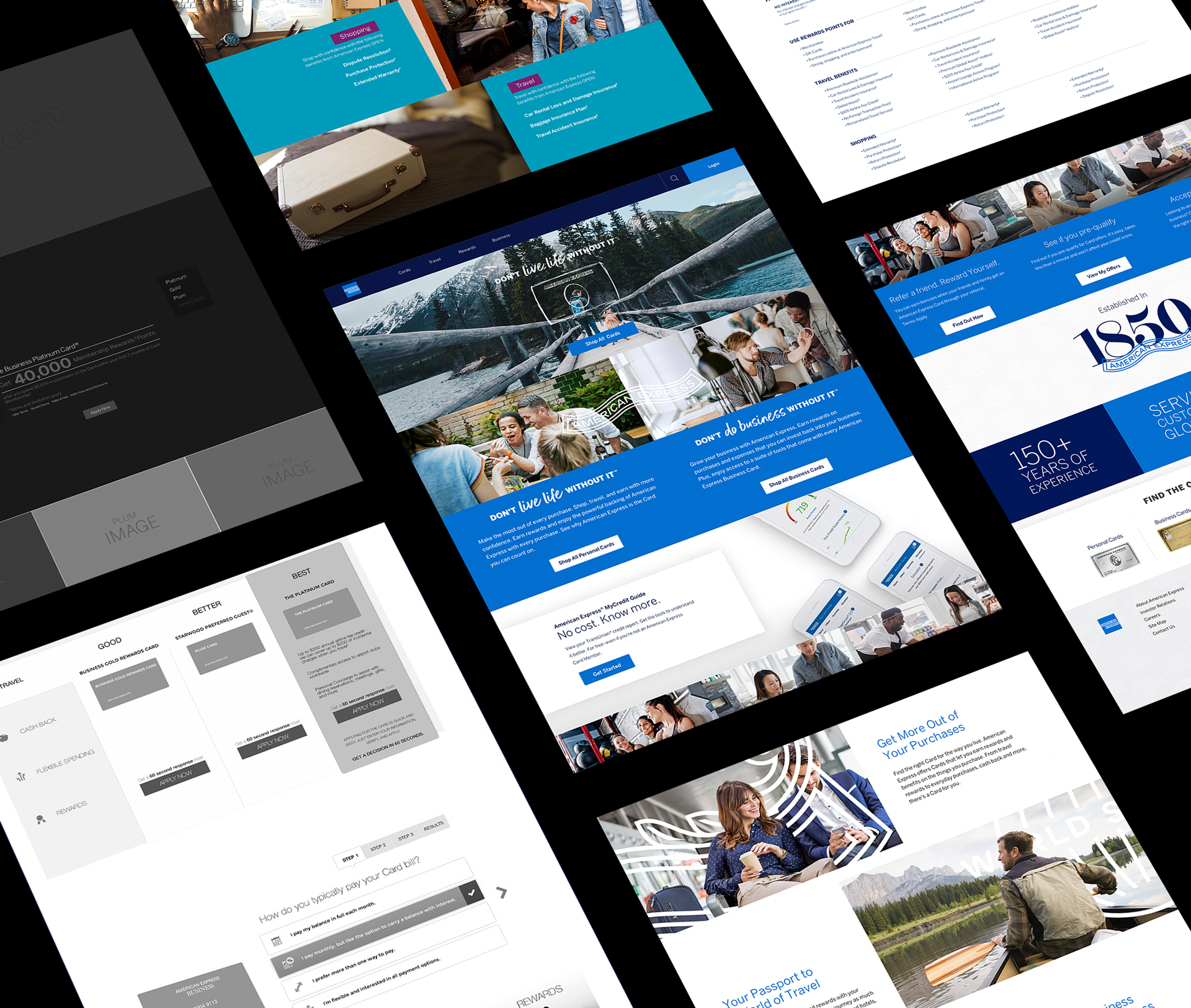
A pure translation of the new brand guidelines — leaned heavily into marketing content, with three competing gateways to different business units fighting for homepage real estate. It offered little in the way of clear calls-to-action or guidance toward an actual product decision. Our testing showed this experience falling short across the board.
Our Model
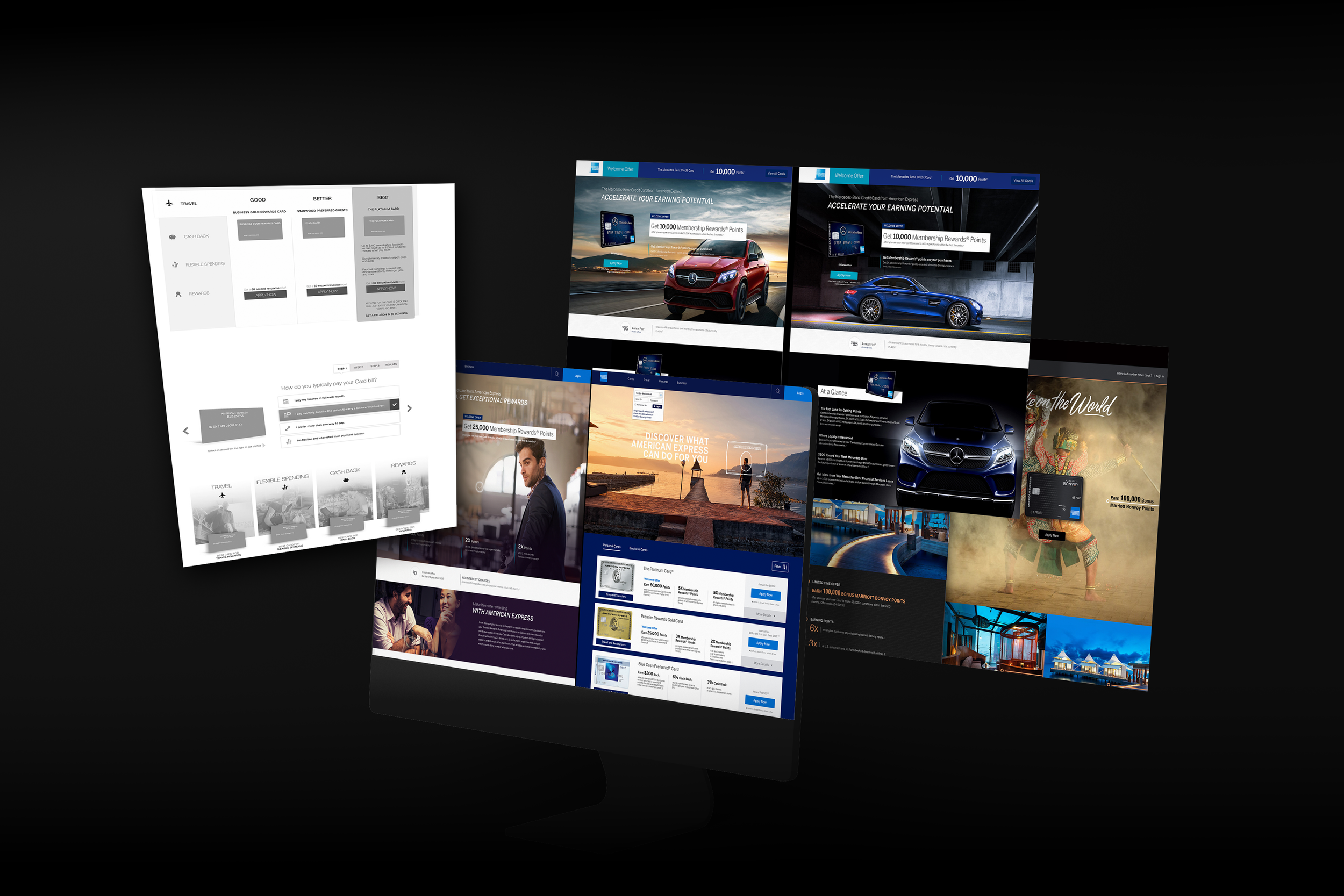
Our Model was the resolution: keep the branded hero intact, but give users something to actually act on. We surfaced the top three benefits for each card, showed three to four cards selected using data science input, and kept everything consumable on a single page. A second iteration added a short qualifying-questions wizard, guiding undecided users to the card that actually fit them.
05
Impact
The self-serve model won on every metric that mattered.
Model performance
Our Model consistently outperformed the original Amex Rebrand Model in testing, validating that a data-personalized, action-oriented layout beat a pure brand-first approach
Decision-making
Visitors could now identify a fitting card and understand its benefits without needing to contact an agent, directly supporting the original goal of reducing agent-dependent calls
Guided decisions
The qualifying-questions wizard gave undecided users a clear path to a recommendation, rather than leaving them to compare cards unassisted